
Replay: 'Mohenjo Daro' And A.R. Rahman's Sound For A City Nobody Has Heard
Rahman's soundtrack for the 2016 film Mohenjo Daro has outlived the film, with 'Tu Hai' doing the heavy lifting and the instrumentals the best thing on it.

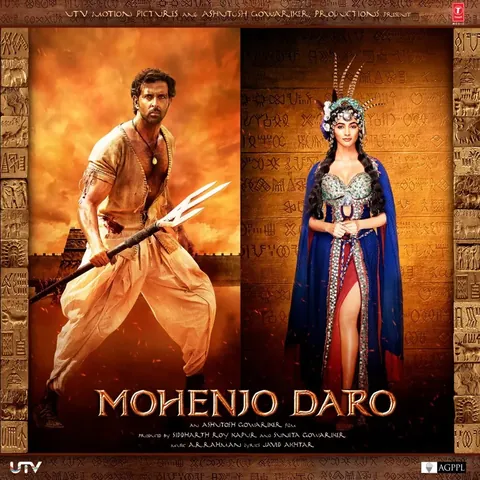
Nobody knows what the Indus Valley sounded like, which was both the problem and the freedom A.R. Rahman had on Mohenjo Daro. It was his fourth film with Ashutosh Gowariker after Lagaan, Swades and Jodhaa Akbar. Rahman has said he expected something like a dry historical documentary until Gowariker showed him the pictures, and after that he tried to "unearth" the place with his imagination. Javed Akhtar wrote the lyrics, his second film with the pair after Jodhaa Akbar. T-Series paid a reported Rs 15 crore for the music rights and released the eight-track album on 6 July 2016. It runs just under 37 minutes and was recorded across Rahman's Panchathan Record Inn and AM Studios in Chennai and two studios in Mumbai.
The film, starring Hrithik Roshan and Pooja Hegde, didn't connect. The music has had a longer life, especially among listeners who go looking for Rahman's less obvious work.
'Tu Hai'
Rahman sings this one himself with Sanah Moidutty, and it is the album's best-known song. It is a hushed, slow duet, closer to a lullaby than a period love song. Moidutty has said Rahman pushed her out of her comfort zone on it. The video, released the same day as the album, put Hrithik Roshan and Pooja Hegde around the Great Bath, and it was mocked on release. A decade later the song turns up on listeners' lists of underrated Rahman, and a version appeared on MTV Unplugged.
Rahman's voice has a slight roughness, and he leaves it in. The melody comes back twice more on the album, in the instrumental and in 'Sindhu Ma'. "Sindhu Ma", sung by the same pair, runs 5:47.
'Sarsariya'
Shashwat Singh and Shashaa Tirupati get the album's fastest song, with Tirupati stretching across her range over tribal percussion and chant. It topped national charts on release alongside "Tu Hai", and it still shows up at college fests where nobody has seen the film. Tirupati sounds as though she is enjoying every bar of it. At 6:10 it is also one of the album's longest tracks, and its video came out on 25 July, before the film opened. In online threads about the album it is usually the first one named. The rhythm carries the made-up words before anyone tries to parse them.
'The Shimmer Of Sindhu'
The instrumental version of the "Tu Hai" melody, about four minutes long. Rahman hands it to Keba Jeremiah's guitar and Kareem Kamalakar's flute, and the two take it slowly. It is the plainest view on the album of the tune underneath the other songs.
Daily game
Today's Guess
Four songs. Clues unlock as you guess.
Get Tracklist
Weekly playlists and our best stories. Free.
'Whispers Of The Mind' And 'Whispers Of The Heart'
Arjun Chandy leads a vocal group through two chant-based pieces, layering human rhythm over ambient sounds of crickets and running water. Chandy also conducted the choir across the album. The two pieces are closer to score than song. There are no lyrics in them to date them, only voices, insects and water. The last track, "Lakh Lakh Thora", is another instrumental, played by Tapas Roy on ethnic strings and Naveen Kumar on flute. The players list across the album includes a ravanhatha, played by Chandan, and a kora.
'Mohenjo Mohenjo'
The opening song is the grandest: Arijit Singh, Bela Shende, Moidutty and Rahman over a large choral and orchestral bed. At 6:22 it is the longest track on the album. Brass and choir build through it. Akhtar's mix of formal Hindi and invented "tribal" phrases has Singh singing a language nobody speaks.
It never caught on the way the two hits did. Of all eight tracks, it is the one that sounds most like the film's poster.
(Source: official soundtrack credits, T-Series release)